Thursday, 14 May 2015

Dwarfism in Livestock


Dwarfism in Livestock


Dwarfism is characterized by short stature.  Dwarfism can be caused by any one of more than 300 conditions, most of which are genetic. 


There are two main categories of dwarfism -- disproportionate and proportionate. Disproportionate dwarfism is characterized by an average-size torso and shorter arms and legs or a shortened trunk with longer limbs.


In proportionate dwarfism, the body parts are in proportion but shortened. Dwarfism can be caused by any of more than 200 conditions.


 Causes of proportionate dwarfism include metabolic and hormonal disorders such as growth hormone deficiency. 


The most common types of dwarfism, known as skeletal dysplasia’s, are genetic. Skeletal dysplasia’s  are conditions of abnormal bone growth that cause disproportionate dwarfism.


Thursday, 7 May 2015

Black and White spotting in animals


Black and White spotting in animals


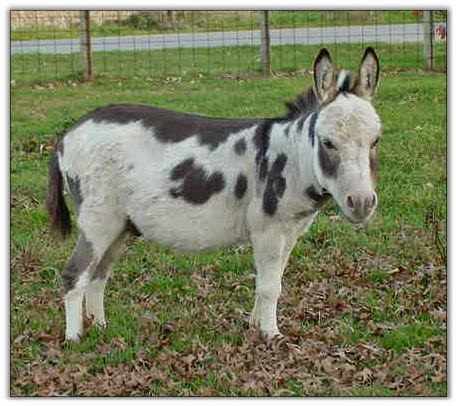
Spotting is a common pattern in various group of animals. White spots against a colour body are of different sizes, shapes and placement seemingly at random.The random spotting, not including the face is thought to be inherited as a recessive trait.


A piebald or pied animal is one that has a spotting pattern of large unpigmented, usually white, areas of hair, feathers, or scales and normally pigmented patches, generally black.


The colour of the animal's skin underneath its coat is also pigmented under the dark patches and unpigmented under the white patches. 


This alternating colour pattern is irregular and asymmetrical. Animals with this pattern may include horses, dogs, birds, cats, pigs, and cattle, as well as snakes such as the ball python.


Some animals also exhibit colouration of the irises of the eye that match the surrounding skin (blue eyes for pink skin, brown for dark). The underlying genetic cause is related to a condition known as leucism.


Monday, 4 May 2015

Zebra colour pattern in Livestock


Zebra colour pattern in Livestock


Cat, dog, tiger, giraffe, bird, pigeon, fish, snake, butterfly, caterpillar and many more……. , have typical zebra markings due to combination of color genes.


Coloration and patterning are important adaptive characteristics in many  species from fruit flies to humans.  Zebra stripes are among the most striking mammalian coat patterns.


Variation in striping patterns has also figured prominently in sub specific classifications. Stripe variation may represent adaptive variation rather than simply resulting from drift in isolated populations.


The stripes are related to temperature . Researchers show that zebras are more heavily striped in places with hotter climates.